
Sitting at a desk for eight hours a day creates a predictable pattern of tightness: hip flexors shortened, thoracic spine stiffened, neck and upper trapezius holding chronic tension, hamstrings compressed. This sequence targets those areas specifically. You do not need a studio, a teacher, or any equipment — a yoga mat and enough floor space to stretch out is sufficient.
How to Use This Sequence
Move slowly. These are not poses to push through quickly — deep stretching works best with sustained holds (30 to 60 seconds) and breath. If you feel sharp pain at any point, come out of the pose. The sensation you are looking for is tension releasing gradually with time, not a sharp edge.
If you have existing back, hip, or knee issues, check with your physiotherapist about which movements to modify or avoid. The sequence below can be adapted significantly with props — a folded blanket under your hips, a rolled towel under your knees — if needed.
The Sequence (30 Minutes)
1. Supine Knees to Chest (2 minutes). Lie on your back. Draw both knees to your chest and hold, breathing into your lower back. This decompresses the lumbar spine after hours of sitting. Rock gently side to side if that feels good.
2. Supine Twist (2 minutes each side). From knees-to-chest, let both knees fall to one side while your arms extend outward. The goal is a gentle rotation through the spine. Do not force your knees to the floor — let gravity do the work over time.
3. Figure-Four Hip Opener (3 minutes each side). Lie on your back. Cross one ankle over the opposite thigh, flex that foot, and either stay there or draw the lower leg toward your chest. This targets the piriformis and hip external rotators — muscles that are often the actual source of lower back tightness in desk workers.
4. Supported Bridge Pose (2 minutes). Feet flat on the floor, hip-width apart. Press into your feet and lift your hips. This counteracts the forward flexion of sitting and activates the glutes. Hold passively and breathe.
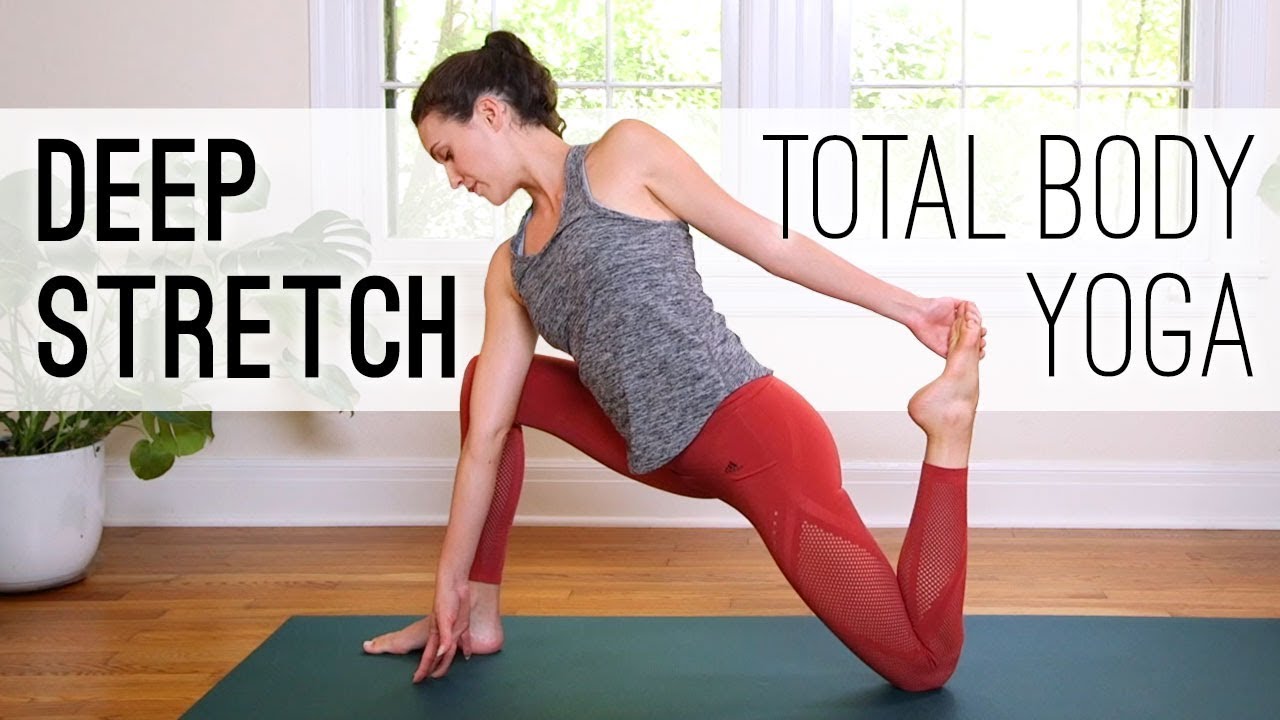
5. Low Lunge, Hip Flexor Focus (2 minutes each side). Step one foot forward into a lunge, back knee on the mat. Shift your hips forward gently until you feel stretch at the front of the back hip. This directly addresses shortened hip flexors — the psoas and iliacus — which are consistently over-shortened by prolonged sitting.
6. Seated Forward Fold (3 minutes). Sit with legs extended. Fold forward, keeping your spine long rather than rounding aggressively. If your hamstrings are tight, sit on a folded blanket or bend your knees slightly. This is about lengthening the posterior chain, not touching your toes.
7. Thread the Needle (2 minutes each side). On hands and knees, slide one arm under your body, lowering that shoulder to the mat. This releases thoracic rotation restriction — the stiffness that accumulates from sitting in the same position facing a screen.
8. Melting Heart Pose (3 minutes). On hands and knees, walk your hands forward and lower your chest toward the mat while keeping your hips stacked over your knees. This opens the thoracic spine and chest — the counterpose to the rounded-shoulder posture of desk work.
9. Legs Up the Wall (5 minutes). Lie with your legs up a wall. Completely passive. Drains fatigue from the legs and calms the nervous system. The single highest-return recovery pose available for desk workers.
How Often
Three times a week produces meaningful results over four to six weeks. Daily is fine if the sequence feels good. The cumulative effect of consistent, sustained stretching is gradual — you are working with connective tissue, which adapts more slowly than muscle.